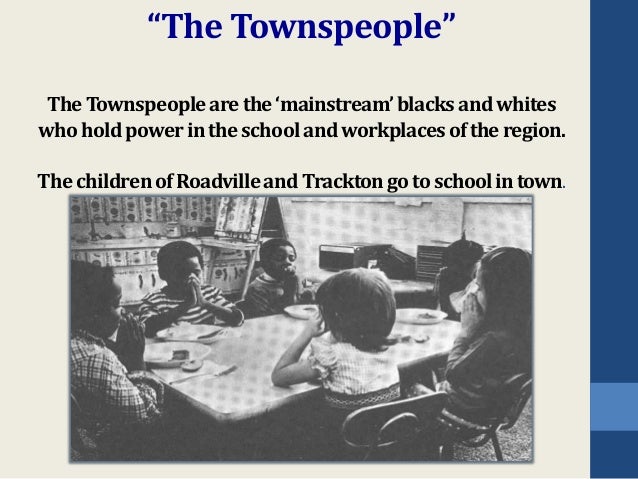
 At the beginning of this week, I was happy to be introduced to the communities of Roadville, Trackton, and "The Townspeople."
I was very surprised because my first impression was that this book would be looking at English Language Learners as dialect speakers rather than students whose first language is a different language such as German or Spanish. In addition, before I started reading this book, I hadn't given much thought to the concerns many teachers must have had in their newly desegregated classrooms related to teaching multicultural students.
My understanding of this topic is growing. I am now seeing how teaching ESL and/or teaching students from others cultures involves so much more than whether or not they are proficient in speaking Standard English.
Another theme within the prologue and chapter 1 that I was pleasantly surprised about was how both communities valued and supported their local Adult Education programs. From what I read, it seems that the Adult Education programs described in the book met very similar needs within the communities of Roadville and Trackton in the late 60's and 70's as our local Adult Ed. programs do today for the communities within Southern Illinois.

Given the demographic landscape of U. S. classrooms and the number of students who speak a language or dialect that is not the language of wider communication, a number of classroom teachers have become ESL teachers by default (as frightening as that may sound).
ReplyDeleteIn one of your other posts, you alluded to the distinction between an ESL and a bilingual teacher. An ESL teacher does not need to be fluent in a language other than the target language. However, a bilingual teacher must be proficient in both the native language of the students as well as the target language.